
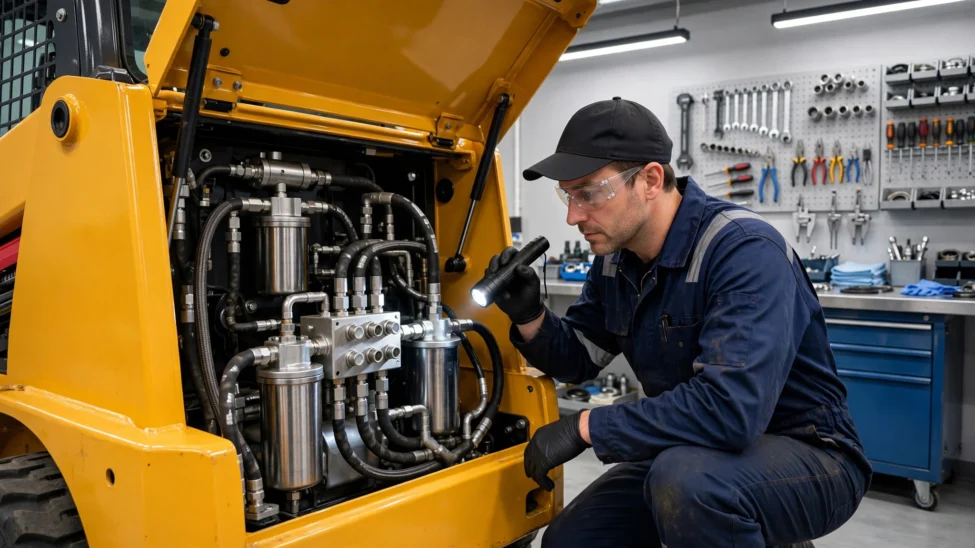
5 Hydraulic Maintenance Mistakes on Your Mini Skid Steer That Cost You Thousands
You own a compact loader and rely on it daily. You probably think you take great care of it, but there is a high chance you are making severe hydraulic maintenance mistakes. These oversights will inevitably cost you thousands of dollars, destroy your machine’s internal components, and bring your job site to a grinding halt.
Fluid systems are incredibly expensive, complex, and highly sensitive. Small errors snowball into catastrophic failures and massive repair bills. This comprehensive guide uncovers the top five hydraulic maintenance mistakes you must avoid. By dodging these critical hydraulic maintenance mistakes, you will save your hard-earned money and keep your equipment running flawlessly.
Table of Contents
1. Skipping Routine Fluid Changes
Hydraulic oil is the absolute lifeblood of your compact equipment. It transfers power, lubricates moving metal, and carries damaging heat and contaminants away from vital areas. Skipping scheduled fluid swaps is one of the most destructive hydraulic maintenance mistakes an operator can make. Many owners falsely believe this fluid lasts forever, but it actually breaks down and loses its protective properties over time.
Degraded fluid fails to lubricate effectively, causing metal parts to score, wear down, and eventually seize. Furthermore, old oil cannot dissipate heat, leading to melted seals and burst hoses. When you commit these hydraulic maintenance mistakes, microscopic metal shavings and dirt circulate freely, shredding your pump and cylinders.
⚠️ The Price of Procrastination
Changing the fluid costs roughly $100 to $300, whereas a full system failure can exceed $8,000. Do not let lazy hydraulic maintenance mistakes destroy your heavy equipment.
2. Neglecting Filter Replacements
Your system’s filter acts as a crucial barrier, capturing abrasive dirt before it wreaks havoc. Forgetting to replace this part is another one of the leading hydraulic maintenance mistakes that plagues the industry. Owners often overlook the filter, assuming it requires no attention.
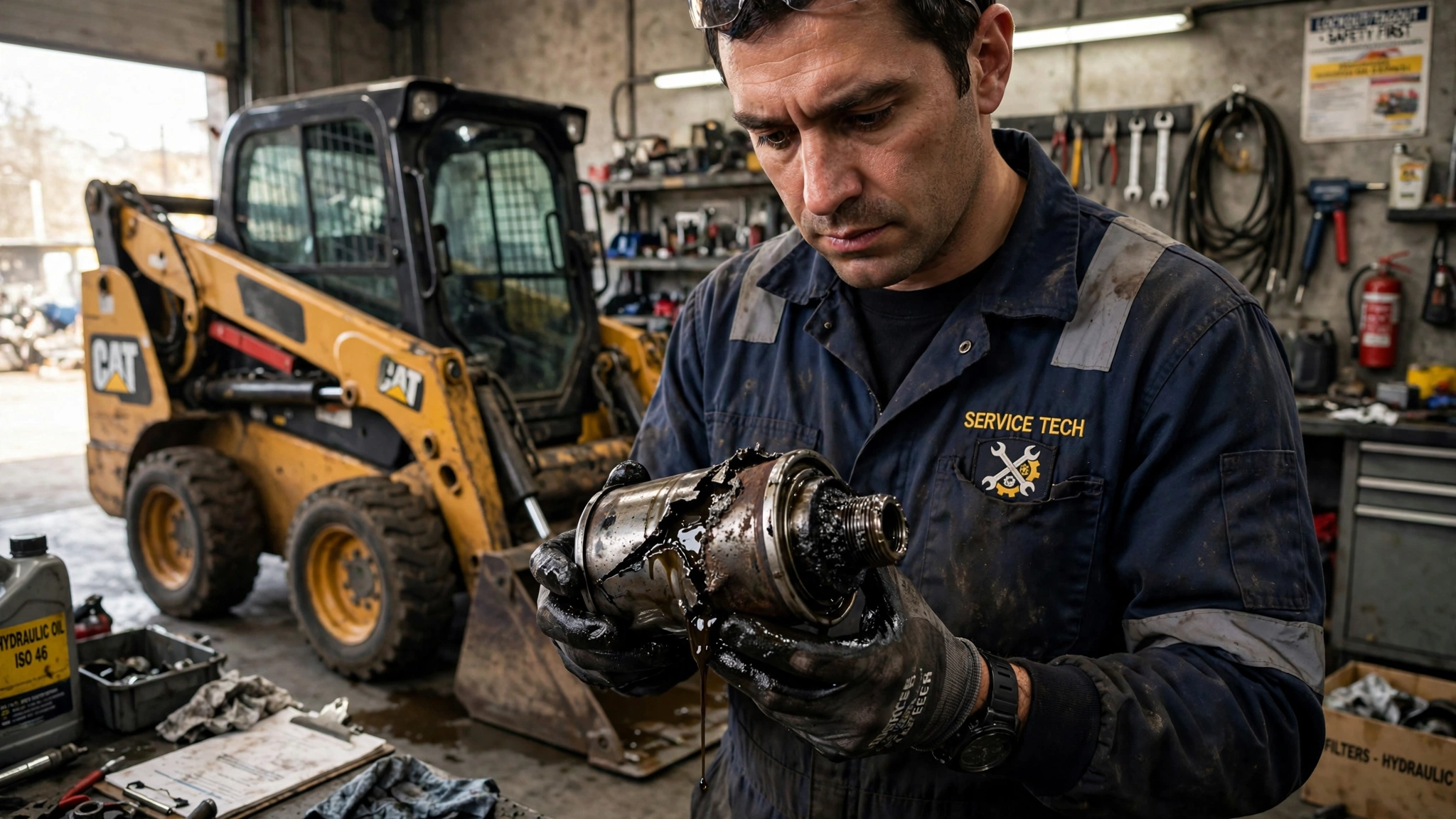
When a filter clogs, fluid flow is severely restricted, forcing the pump to work twice as hard. Eventually, unfiltered fluid bypasses the barrier entirely, distributing abrasive debris throughout your valve block. A blocked filter also causes pump cavitation—where air bubbles violently collapse and shatter the pump’s internals. A new filter costs $30 to $50, making this one of the most easily avoidable hydraulic maintenance mistakes. Regularly replacing your filters ensures you never fall victim to these costly hydraulic maintenance mistakes.
3. Using the Wrong Fluid Type
Not all oils are engineered equally, and different machines require highly specific formulations. Pouring the wrong fluid into your reservoir is among the most immediate hydraulic maintenance mistakes you can commit. Operators often grab whatever cheap fluid is on the auto parts store shelf, assuming it will work perfectly.
The wrong fluid often lacks the proper viscosity. If it is too thick, the pump starves and cavitates; if it is too thin, it fails to lubricate. Furthermore, incorrect additives will cause internal seals to swell, crack, and leak rapidly. Using an incompatible oil is a textbook example of hydraulic maintenance mistakes that instantly void warranties. Always consult your manual and avoid these unforced hydraulic maintenance mistakes by purchasing only manufacturer-approved hydraulic oil.
4. Ignoring Minor System Leaks
Leaks are never normal and should never be considered “acceptable.” A dripping hose indicates a breached system, and ignoring it ranks high on the list of fatal hydraulic maintenance mistakes. A minor drip today will quickly escalate into a massive gush tomorrow, emptying your reservoir and running your expensive pump completely dry.
Furthermore, wherever fluid can escape, dirt and moisture can enter. Leaks point to failing seals, aging hoses, or loose fittings. Whenever you spot a puddle beneath your machine, you must fix it immediately. Dismissing a small drip is one of the worst hydraulic maintenance mistakes because it directly leads to sudden, total machine shutdowns. Act quickly to ensure these hydraulic maintenance mistakes do not bankrupt your contracting business.
5. Failing to Check Daily Fluid Levels
Fluid levels fluctuate due to evaporation, heavy usage, and micro-leaks. Failing to verify your reservoir level every single morning is one of the most common hydraulic maintenance mistakes made by novice operators. They blindly assume the levels are fine until the machine violently stops working.
Low fluid starves the pump, creates extreme friction, and causes the entire system to overheat rapidly. Taking just one minute to check the sight glass prevents you from committing these foolish hydraulic maintenance mistakes. Make it a strict daily habit, especially if you rely on high-performance machines like the Typhon STOMP V900 1.4 Ton Compact Track Loader.
The Staggering Costs of Neglect
Let’s break down exactly why committing these hydraulic maintenance mistakes is so financially devastating. A main pump replacement costs between $1,500 and $2,500, with labor pushing the bill to $3,500. Replacing a ruined drive motor runs $1,100 to $2,500, while a contaminated valve block will set you back up to $2,500.
Add in the massive costs of project downtime, lost revenue, and angry clients, and the total fallout from these hydraulic maintenance mistakes can easily exceed $10,000. All of this is entirely preventable through basic diligence.
Real-World Examples of Disaster
Consider a contractor in California who skipped his fluid changes for 2,000 hours. The degraded oil caused a total pump failure, resulting in a $2,800 repair bill and $4,000 in lost work. Another landscaper used cheap, unapproved oil that swelled his seals, causing a $1,500 repair. These operators committed textbook hydraulic maintenance mistakes and paid dearly for them.
❌ Do Not Ignore the Warning Signs
If your loader begins to operate sluggishly, makes whining noises, or overheats, your fluid system is compromised. Shut the machine down immediately before the damage spreads.
How to Avoid These Errors Today
Avoiding these issues is incredibly simple. Read your owner’s manual, create a strict service log, and check your sight glass daily. By maintaining a clean environment and replacing filters on schedule, you will successfully bypass these hydraulic maintenance mistakes.
✅ Your Proactive Maintenance Plan
- Check your fluid levels every single morning.
- Only use the exact oil specified by the manufacturer.
- Replace your filters precisely at the 50-hour and 200-hour marks.
- Fix every drip and leak the moment you spot it.
Protect your investment, as eliminating these hydraulic maintenance mistakes is the guaranteed path to long-term profitability and equipment longevity.