Compact Mini Skid Steer Maintenance: 6 Critical Checks to Prevent Hydraulic Failures
Table of Contents
Compact track loaders work relentlessly on the toughest job sites. They excavate, grade, and power heavy attachments all day long. Because pressurized fluid drives every single function of the machine, prioritizing proper Compact Mini Skid Steer Maintenance is non-negotiable. When the hydraulics fail, the equipment stops, your progress halts, and your profitability plunges.
Data shows that ignoring Compact Mini Skid Steer Maintenance causes the highest downtime across the construction industry. Luckily, these expensive catastrophes are entirely preventable. This guide details six critical steps of Compact Mini Skid Steer Maintenance to prevent total hydraulic failure and save your business thousands of dollars in mechanical repairs.
1. Hydraulic Fluid Level
Fluid is the ultimate lifeblood of your loader. When levels drop too low, the main pump starves and begins cavitating, shredding its internal components. Incorporating fluid checks into your Compact Mini Skid Steer Maintenance saves $3,000 in immediate replacement costs.
Always inspect the fluid level before turning the key. Park on completely flat ground, lower the arms, shut the engine off, and let the oil settle. Check the sight glass or dipstick to ensure the level rests perfectly between the indicator marks. If you need to top it off, typically with ISO 46 hydraulic oil, pour slowly to avoid overfilling, which causes destructive foaming.
⚠️ A Real-World Example
A contractor in Texas checks his fluid every morning. Because his strict Compact Mini Skid Steer Maintenance routine prevented pump replacements for five years, his fifteen-second daily habit has literally saved him thousands.
2. Hydraulic Hoses and Fittings
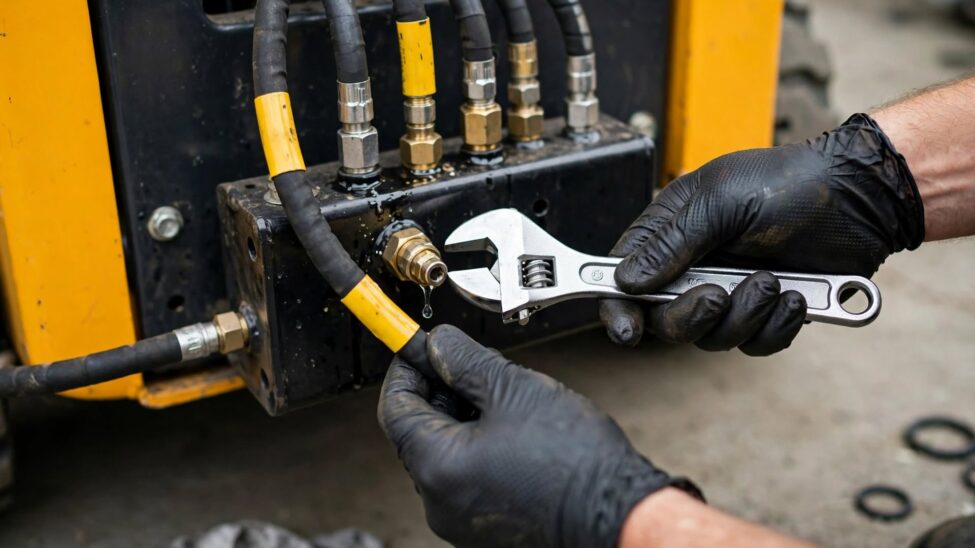
Pressurized lines endure extreme mechanical stress and abrasive environments. They crack, bulge, and inevitably leak over time. Checking hoses is a vital part of Compact Mini Skid Steer Maintenance before every shift.
Run your gloved hand along the lines. Look for severe abrasions, check for wet weeping near the fittings, and replace compromised rubber before it violently bursts mid-job. Also, gently tighten any fittings loosened by machine vibration, being careful not to strip the delicate threads. A Florida worker found a leaking hose during his Compact Mini Skid Steer Maintenance check, spending just $40 to prevent a messy $1,500 onsite failure.
3. Hydraulic Fluid Condition
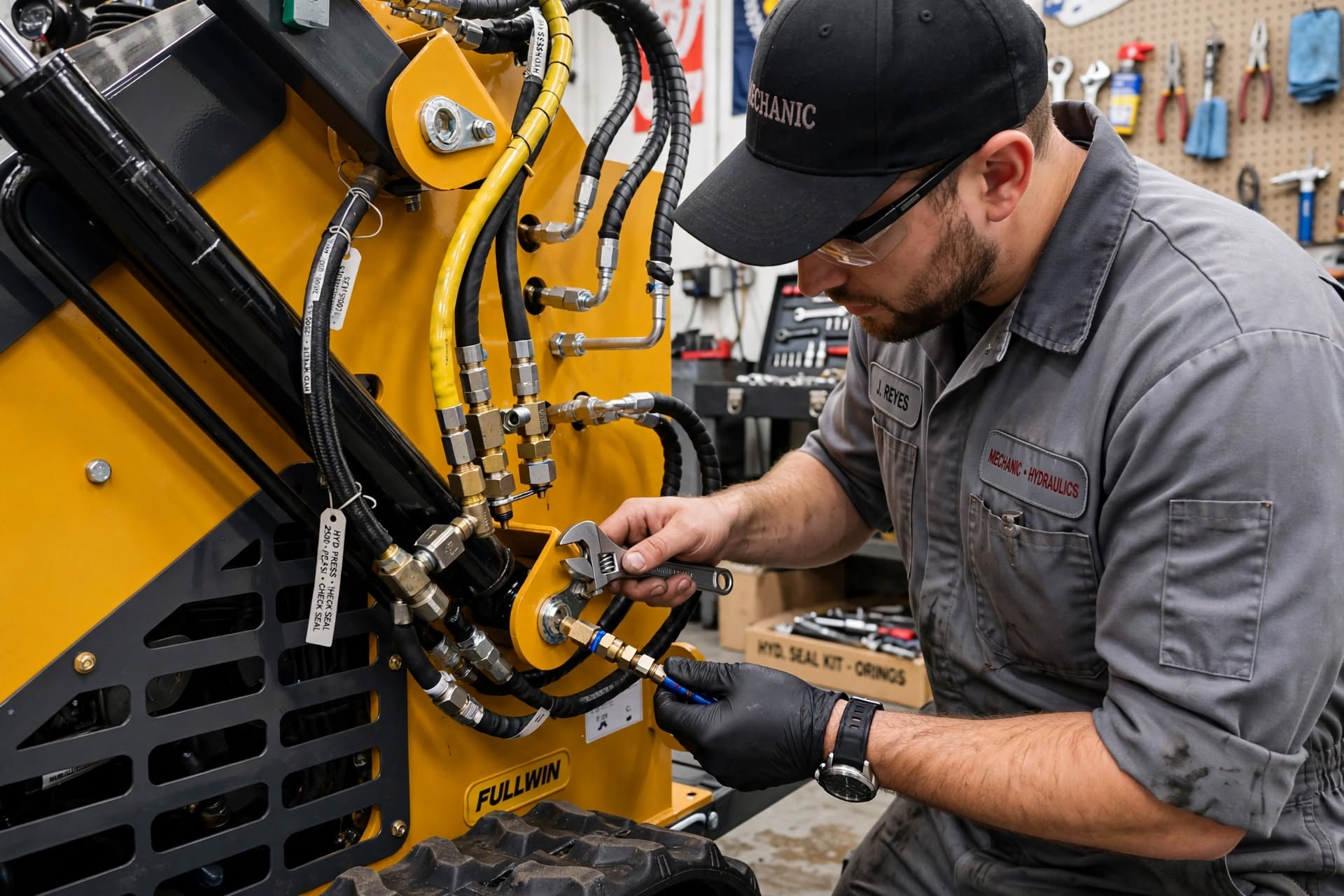
The internal condition of the fluid matters just as much as the volume. Healthy oil boasts a clear, amber tint. If it looks dark black, it is severely burnt. If it appears milky, water has breached your sealed system. You must also smell the fluid; a sharp, acrid odor screams of extreme overheating.
Wipe the dipstick on a clean rag and inspect for tiny metal shavings, which indicate failing internal bearings. Changing filters is a pillar of Compact Mini Skid Steer Maintenance and should occur strictly between 500 and 1,000 hours as specified by your manual. An Ohio owner ignored this step of Compact Mini Skid Steer Maintenance and paid $2,500 when his pump died at 800 hours simply because he skipped a $200 fluid swap.
4. Hydraulic Cooler and Cooling Fins
Hydraulic fluid generates extreme thermal energy during operation. The dedicated cooler dissipates this heat, but if the fins are choked with job site dust, grass clippings, and mud, the fluid boils and breaks down chemically.
Blowing out the cooler is an essential Compact Mini Skid Steer Maintenance task. Use compressed air to clear the fins daily, and verify that the cooling fan spins freely without obstruction. An Arizona contractor cleans his fins every morning. This reliable Compact Mini Skid Steer Maintenance habit keeps his fluid temperatures perfectly normal despite the sweltering desert heat.
5. Hydraulic Controls and Joysticks
Your cab controls physically direct fluid through the valve spools to operate attachments like the TYPHON STOMP X1300 pallet fork attachment. Before shifting into gear, test every joystick. Stiff, sticking controls usually mean contaminated fluid, while aggressive grinding implies heavily worn internal spools.
6. Hydraulic Cylinders and Seals
The robust cylinders on your loader lift massive weights by converting fluid pressure into physical motion. When the internal rubber seals degrade, fluid drips out and lifting power plummets. Thorough Compact Mini Skid Steer Maintenance requires inspecting rods for scratches, as marred steel will instantly slice a brand-new seal.
Check the cylinder pivot pins for excessive play, as severe misalignment crushes the seals from the inside out. A Texas contractor caught a leaking tilt cylinder early. His diligent Compact Mini Skid Steer Maintenance saved a $600 replacement by fixing a cheap $50 seal on the spot.
The Cost of Neglecting Hydraulic Health
A blown system costs significantly more than just the mechanic’s invoice—it costs your reputation. A new pump runs up to $3,000, valve blocks cost $1,500, and a replacement cylinder hits $1,200. Beyond parts, sudden downtime strips $100 to $300 an hour from your expected revenue.
A 15-minute daily Compact Mini Skid Steer Maintenance routine avoids $12,000 weeks of downtime. The mathematics of prevention are absolutely undeniable.
Daily, Weekly, and Annual Schedules
Consistency keeps heavy machinery alive. Your daily Compact Mini Skid Steer Maintenance covers fluids, hoses, and cylinders before the key turns. Weekly and monthly Compact Mini Skid Steer Maintenance includes filter swaps, structural tightening, and professional pressure testing.
❌ Avoid Fatal Industry Mistakes
Never mix different brands of hydraulic fluid, as clashing chemical additives will dissolve internal seals. Furthermore, never ignore a tiny drip—small leaks always become catastrophic blowouts under high pressure.
Common Mistakes & Operator Training
Using improper fluid specs immediately damages the pump. Avoiding these errors improves your Compact Mini Skid Steer Maintenance results. A Texas fleet owner doing proper Compact Mini Skid Steer Maintenance saved $50,000 annually simply by strictly adhering to a daily checklist.
✅ Train Your Team Today
- Show new operators where the reservoir and sight glasses are located.
- Ensure no machine moves until the 15-minute checks are complete.
- Print physical checklists and require operator signatures daily.
Accountability in Compact Mini Skid Steer Maintenance is key. Investing in reliable machines like the TYPHON STOMP V1000 Kubota Diesel Skid Steer makes Compact Mini Skid Steer Maintenance easier and highly profitable.