Mini Skid Steer Beats Bigger Machines. 5 Tight Site Advantages.
Table of Contents
- 1. Fits Through Standard Gates and Doorways
- 2. Turns in Its Own Footprint
- 3. Works in Confined Spaces
- 4. Reduces Ground Damage
- 5. Transports Easily and Affordably
- 6. Real Job Site Examples
- 7. When a Mini Skid Steer Beats Bigger Machines
- 8. When Bigger Machines Have the Advantage
- 9. Choosing the Right Mini Skid Steer
- 10. The Bottom Line
A mini skid steer beats bigger machines on tight job sites. This is not an opinion. This is a fact. Contractors across the country discover this every day. Bigger machines have power. Bigger machines have capacity. But bigger machines cannot fit through a standard gate. Bigger machines cannot turn in a small backyard. Bigger machines cannot work in a crowded urban alley.
A mini skid steer beats bigger machines because it goes where they cannot. It works in spaces that big equipment cannot reach. It completes jobs that big equipment cannot start. This guide covers 5 tight site advantages of a mini skid steer.
Fits Through Standard Gates and Doorways
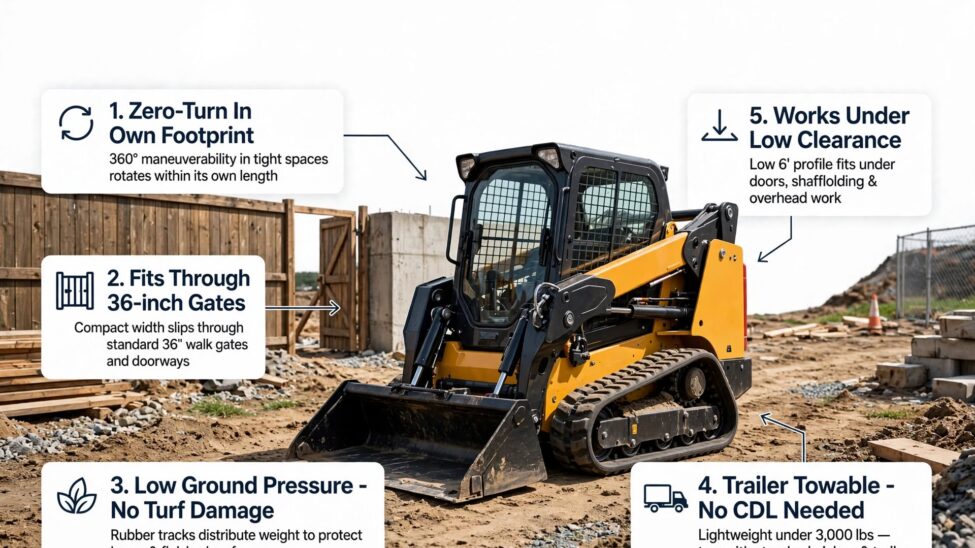
A mini skid steer measures 36 to 48 inches in width. This narrow footprint fits through standard residential gates. Most gates measure 36 to 48 inches wide. A mini skid steer passes through easily.
Bigger machines measure 60 to 84 inches wide. They cannot fit through residential gates. They stop at the curb. They cannot enter the backyard. The contractor must use manual labor or smaller equipment.
A mini skid steer beats bigger machines on residential jobs. The machine enters the backyard. It completes the work. The contractor does not need wheelbarrows. The contractor does not need extra workers. One machine does the job.
⚠️ Indoor Accessibility
A mini skid steer also fits through standard doorways. Barn doors. Shed doors. Garage doors. The machine enters buildings. It moves materials inside. It cleans stalls. It handles feed. Bigger machines stay outside.
Tight urban sites have narrow access points. Alleys. Sidewalks. Building corridors. A mini skid steer navigates these spaces. Bigger machines cannot enter. The mini skid steer beats bigger machines on urban jobs.
Turns in Its Own Footprint
A mini skid steer has zero-turn capability. The machine spins in place. It changes direction instantly. It does not need extra space to maneuver.
Bigger machines have turning radii. They need space to turn. A 10-foot turning radius requires a 20-foot circle. Tight sites do not have this space. The operator makes multiple forward and reverse movements. This wastes time. This damages property.
A mini skid steer beats bigger machines in tight spaces. The operator spins the machine. The machine faces the new direction. The work continues. No wasted movement. No damaged lawns.
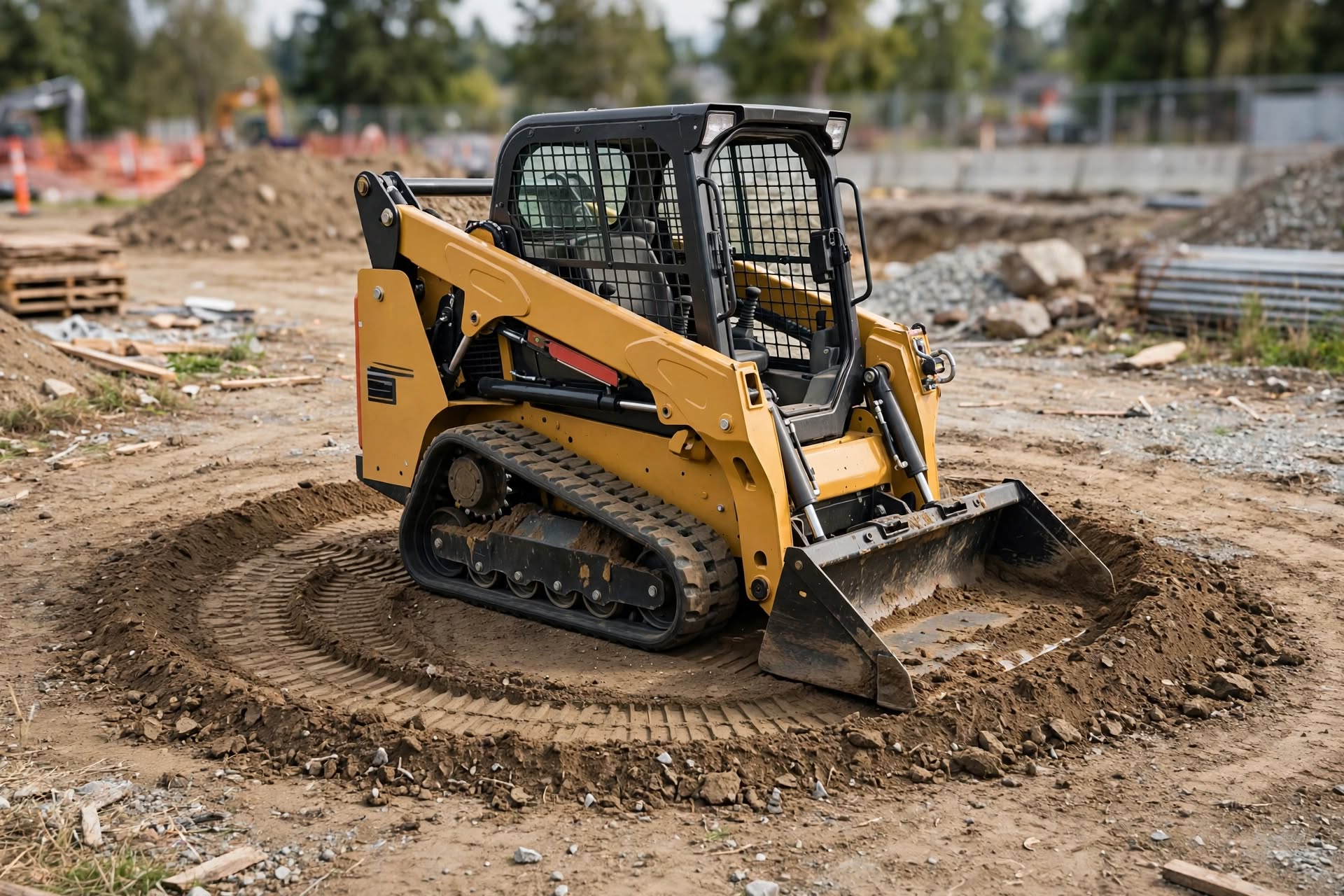
Zero-turn capability matters in landscaping. The operator works around trees. The operator works along fences. The operator works in flower beds. The mini skid steer turns precisely. It does not crush plants. It does not damage hardscaping.
Zero-turn capability matters in construction. The operator works in trenches. The operator works in basements. The operator works in crawl spaces. The mini skid steer maneuvers in these tight areas. Bigger machines cannot enter.
A mini skid steer beats bigger machines because it turns where they cannot. This saves time on every job. This saves money on every project.
Works in Confined Spaces
A mini skid steer works in confined spaces. Basements. Crawl spaces. Attics. Elevator shafts. Confined spaces have limited airflow. Confined spaces have limited access. Confined spaces have limited room to maneuver.
Bigger machines cannot enter confined spaces. They are too large. They are too heavy. They produce too much exhaust. They create safety hazards.
A mini skid steer enters confined spaces. The machine is compact. The machine is lightweight. The machine produces less exhaust. The machine works safely.
Construction contractors use mini skid steers in basements. The machine removes dirt. The machine moves materials. The machine prepares the floor. Bigger machines cannot do this work. Manual labor takes too long.
Demolition contractors use mini skid steers in buildings. The machine removes debris. The machine carries materials. The machine clears the site. Bigger machines cannot enter the building.
A mini skid steer beats bigger machines in confined spaces. The machine works where others cannot. The contractor completes the job. The contractor earns the money.
Reduces Ground Damage
A mini skid steer weighs 1500 to 3000 pounds. This weight distributes across the tracks. Ground pressure is low. The machine does not damage lawns. The machine does not damage pavements. The machine does not create deep ruts.
Bigger machines weigh 6000 to 10000 pounds. This weight concentrates on four tires or two tracks. Ground pressure is high. The machine damages lawns. The machine cracks pavements. The machine creates deep ruts.
A mini skid steer beats bigger machines on finished properties. Landscapers work on existing lawns. The mini skid steer drives across the grass. The grass recovers quickly. The lawn remains healthy.
❌ Do Not Damage Properties
Bigger machines destroy lawns. The tires dig in. The tracks tear up turf. The contractor must repair the damage. This costs money. This costs time. This upsets the customer.
A mini skid steer beats bigger machines on hardscaping. Pavers. Concrete. Asphalt. The mini skid steer spreads its weight. The surface does not crack. The surface does not settle.
Bigger machines crack pavements. The weight is too much. The contractor pays for repairs. The contractor loses profit.
A mini skid steer beats bigger machines because it protects the ground. This saves repair costs. This keeps customers happy.
Transports Easily and Affordably
A mini skid steer fits on a standard trailer. A 5×8 or 6×10 trailer works. The contractor tows with a half-ton pickup truck. No special license. No special permits. No commercial vehicle registration.
Bigger machines need larger trailers. A 20-foot trailer. A 30-foot trailer. The contractor needs a heavy-duty truck. A one-ton truck. A commercial truck. The contractor needs a commercial license. The contractor needs permits. The contractor needs higher insurance.
A mini skid steer beats bigger machines in transport cost. The trailer costs less. The truck costs less. The insurance costs less. The permits cost nothing. The contractor saves thousands.
A mini skid steer beats bigger machines in transport time. The machine loads in minutes. The machine unloads in minutes. The contractor moves between jobs quickly. The contractor completes more jobs per day.
Bigger machines take time to load. They need ramps. They need secure tie-downs. They need wide roads. They cannot access narrow streets. They cannot park in residential areas.
A mini skid steer beats bigger machines on residential streets. The trailer parks in a driveway. The machine unloads. The work begins. No complaints from neighbors. No tickets from parking enforcement.
Transport costs matter. A mini skid steer costs less to own. It costs less to operate. It costs less to move. The savings add up. The mini skid steer beats bigger machines on the bottom line.
Real Job Site Examples
These examples show how a mini skid steer beats bigger machines on tight sites.
- Example one. A landscaper in California. The job is a residential backyard. The gate is 36 inches wide. A bigger machine cannot enter. The landscaper uses a mini skid steer. The machine fits through the gate. The machine moves 10 yards of soil. The machine grades the yard. The job takes one day. Manual labor would take three days.
- Example two. A contractor in New York. The job is a basement renovation. The access is a narrow stairway. A bigger machine cannot enter. The contractor uses a mini skid steer. The machine is lifted into the basement. The machine removes 5 tons of debris. The machine moves materials. The job takes two days. Manual labor would take one week.
- Example three. A farmer in Iowa. The job is a barn cleanout. The door is 40 inches wide. A bigger machine cannot enter. The farmer uses a mini skid steer. The machine enters the barn. The machine removes manure. The machine spreads fresh bedding. The job takes three hours. Manual labor would take two days.
- Example four. A snow removal contractor in Massachusetts. The job is a residential driveway. The driveway is narrow. A bigger machine cannot maneuver. The contractor uses a mini skid steer. The machine clears the snow. The machine stacks it neatly. The job takes 15 minutes. Manual shoveling would take two hours.
These examples prove the point. A mini skid steer beats bigger machines on tight sites. The machine accesses areas. The machine completes work. The machine saves time and money.
When a Mini Skid Steer Beats Bigger Machines
A mini skid steer beats bigger machines in these situations.
- Residential jobs. Tight gates. Small backyards. Finished lawns.
- Urban jobs. Narrow alleys. Sidewalks. Building corridors.
- Interior jobs. Basements. Crawl spaces. Attics. Elevators.
- Landscaping jobs. Planting beds. Hardscaping. Lawn installation.
- Maintenance jobs. Snow removal. Sidewalk clearing. Park maintenance.
- Agricultural jobs. Barn cleanout. Stall cleaning. Feed handling.
A mini skid steer beats bigger machines on all these jobs. The machine fits. The machine maneuvers. The machine works.
When Bigger Machines Have the Advantage
Bigger machines have advantages on some jobs. Large excavation. Heavy lifting. High reach. Wide area coverage. But these jobs are not tight site jobs.
A mini skid steer beats bigger machines on tight sites. Bigger machines win on open sites. The contractor chooses the right machine for the job. The contractor uses a mini skid steer on tight sites.
Choosing the Right Mini Skid Steer
Not all mini skid steers are equal. Choose the right machine for tight sites.
Check the width. A narrower machine fits through more gates. A 36-inch machine fits almost everywhere. A 44-inch machine fits most places. Measure your common access points.
Check the turning radius. Zero-turn capability is essential. The machine spins in place. This saves time on tight sites.
Check the weight. A lighter machine causes less ground damage. A heavier machine provides more stability. Balance these factors.
Check the lift capacity. The machine must lift your typical loads. A mini skid steer lifts 500 to 1500 pounds. Choose based on your materials.
Check the hydraulic flow. The machine must power your attachments. Augers. Trenchers. Grapples. Flow rate matters.
The Bottom Line
A mini skid steer beats bigger machines on tight sites. The machine fits through gates. The machine turns in its footprint. The machine works in confined spaces. The machine protects the ground. The machine transports easily.
✅ Dominate the Tight Sites
These 5 advantages save time. They save money. They win jobs. Contractors who use mini skid steers beat competitors who use bigger machines.
The next time a tight site comes up, choose a mini skid steer. The machine delivers. The machine performs. The machine beats bigger machines.
[…] Job Capacity Comparison: Wondering how compact equipment thrives in difficult areas? Read how a mini skid steer beats bigger machines by utilizing tight spaces […]