
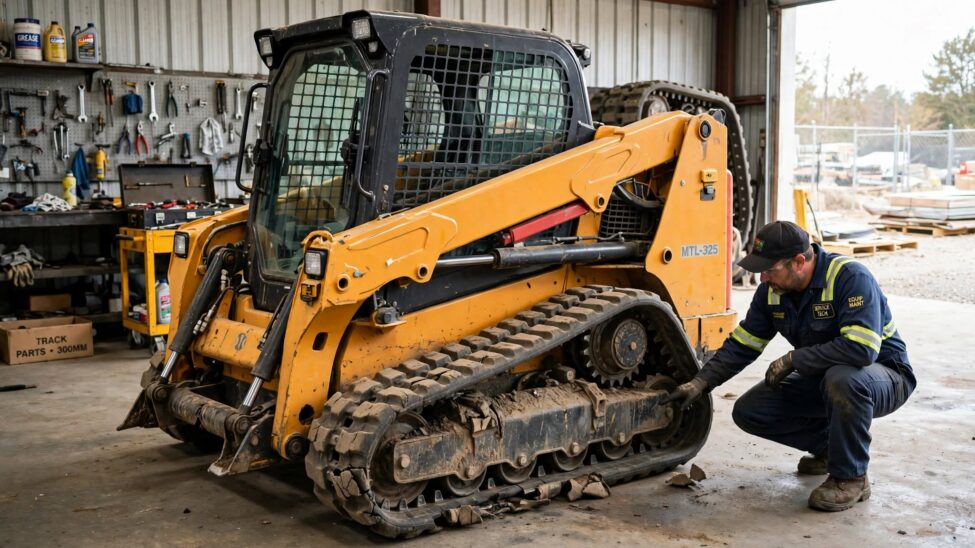
Mini Skid Steer Track Wear. 5 Signs Your Tracks Need Replacement.
Table of Contents
Every heavy equipment owner eventually faces the dreaded reality of mini skid steer track wear. It is easily the most expensive, frustrating problem contractors encounter. A brand-new set of high-quality tracks will set you back between $800 and $1,500, with professional installation adding another $200 to $400 to the bill. While a certain degree of mini skid steer track wear is perfectly normal, catastrophic failure is entirely preventable.
If you learn how to identify the early warning signs of mini skid steer track wear, you can avoid devastating job site downtime. This guide details the five major indicators of mini skid steer track wear that you must check weekly to protect your business.
1. Deep Cracks and Outer Tears
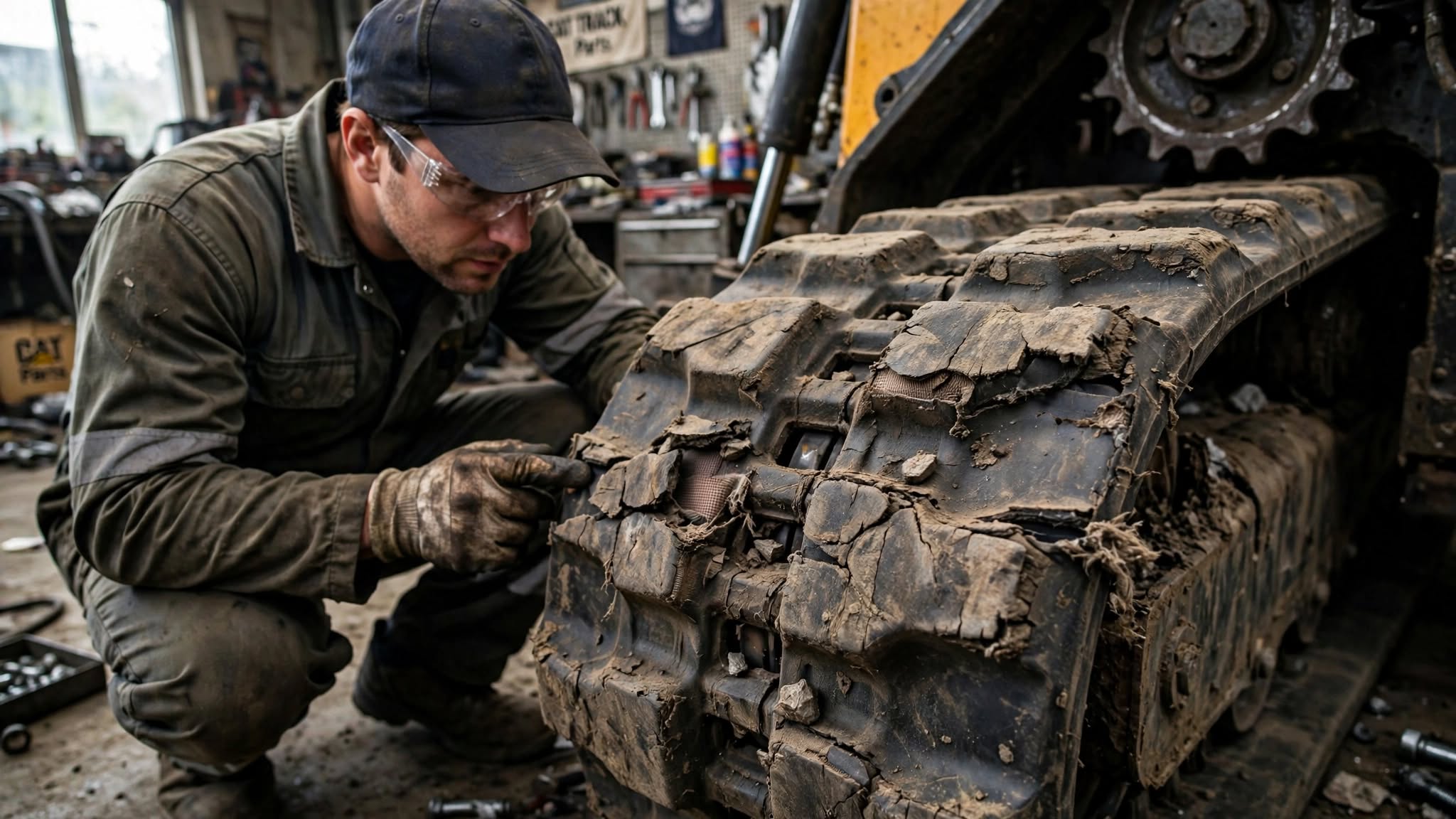
The earliest visual indicator of mini skid steer track wear is almost always surface damage. Minor hairline cracks begin to spiderweb across the rubber surface, while small, jagged tears emerge along the outer edges. What looks like a tiny crack today will inevitably evolve into a complete separation next month if left unchecked.
Inspect the outer and inner surfaces daily. Cracks generally occur because the rubber dries out over time, losing its crucial flexibility. Conversely, aggressive edge tears result from high-impact encounters with sharp rocks and buried debris. Once the rubber separates, you lose all traction. Catching this specific sign of mini skid steer track wear early prevents further internal damage to the sprockets and rollers.
⚠️ Address Damage Early
Do not wait for a complete blowout. A snapped track in the middle of a muddy job site causes severe undercarriage damage and poses a massive safety threat to the operator.
2. Worn Down or Missing Lugs
The raised rubber bars that aggressively grip the earth are called lugs, and monitoring them is vital for assessing mini skid steer track wear. When lugs wear down to nothing, your machine loses its ability to push forward in soft soil.
Brand-new lugs measure roughly 20 to 25 mm in depth. Use a simple ruler weekly; if your measurements drop below 10 mm, your mini skid steer track wear has reached a critical failure point. Missing lugs indicate extreme structural failure, meaning the rubber literally ripped away from the steel core. Operating with missing lugs creates violent vibrations that shake the entire chassis, accelerating the destruction of your internal wheel bearings.
3. Stretched and Extremely Loose Rubber
Over time, heavy hauling stretches both the rubber compounds and the internal steel cords, leading to extreme looseness. Stretched rubber is a massive indicator of mini skid steer track wear because it guarantees frequent, dangerous derailments. When a track slips off the sprocket mid-turn, your entire operation stops dead.
To monitor this specific form of mini skid steer track wear, check your sag weekly. Proper tension allows 1.5 to 2 inches of sag at the center. If you tighten the tensioner and the track still sags past 2 inches, the track has stretched beyond its usable limit. Running loose tracks destroys your undercarriage as the flailing rubber grinds aggressively against the heavy steel frame.
4. Highly Uneven Wear Patterns
Healthy rubber wears down uniformly. If you notice severe baldness on one specific side, you are experiencing uneven mini skid steer track wear. This specific pattern strongly indicates that your internal sprockets are misaligned or your roller bearings have completely failed.
If you see heavy wear exclusively on the outer edge, your track is running off-center. If you observe sectioned bald spots, your sprocket teeth are likely grinding down the rubber at specific contact points. You must fix the mechanical misalignment before installing new rubber, otherwise, you will instantly ruin the new set.
5. Dangerous Exposed Steel Cords
The final, fatal sign of mini skid steer track wear is the appearance of shiny steel cords. These internal cables provide the structural strength that holds the entire loop together. When the rubber wears down enough to expose these cords, the track is fully compromised.
Exposed cords rust instantly in the rain. Once rusted, the steel snaps under tension, causing a catastrophic blowout. Furthermore, frayed steel wires are razor-sharp and pose a severe cutting hazard to your mechanics. If you see shiny steel peeking through the rubber, your mini skid steer track wear has reached its absolute maximum limit. Shut the machine down immediately.
How to Proactively Prevent Track Damage
Preventing mini skid steer track wear is vastly cheaper than paying for replacements. The easiest way to mitigate mini skid steer track wear is by maintaining perfect tension daily. Clean out compacted mud and sharp rocks from your undercarriage every single evening; trapped debris acts like sandpaper against the rubber.
Operator behavior also heavily influences mini skid steer track wear. Avoid violently spinning the tracks on hard asphalt and stop making aggressive, jerky zero-turns. Smooth, gradual turns drastically extend the lifespan of your lugs. Finally, always park the machine in a dry, shaded area, as baking in the hot sun accelerates rubber rot.
❌ Avoid Asphalt Operating
Running rubber continuously on concrete or hot asphalt acts like a giant cheese grater against your lugs. Whenever possible, keep your tracks on dirt or grass to maximize their lifespan.
Replacement vs. Maintenance Costs
Allowing unchecked mini skid steer track wear to destroy your equipment is a massive financial error. Replacing a set costs $1,000 to $1,900. Conversely, a daily prevention routine costs you exactly zero dollars and takes just 20 minutes.
Taking five minutes to check tension, ten minutes to hose out mud, and five minutes for a visual inspection will make your tracks last 30 to 50 percent longer. The mathematics of prevention heavily outweigh the costs of neglect.
When and How to Choose Replacements
Do not wait for a blowout to address mini skid steer track wear. When cracks widen, lugs drop below 10 mm, or tensioning fails, it is time to buy. Select a premium brand with an aggressive block pattern for dirt work or a bar pattern for muddy traction. Ensure the width strictly matches your machine’s factory specifications to prevent derailing.
✅ Dominate Your Undercarriage Health
- Check your track sag and tension twice a week.
- Measure your lug depth to ensure it stays above 10 mm.
- Power wash all mud and rocks out of the sprockets daily.
- Replace tracks immediately if you see exposed steel cords.
By aggressively monitoring these five signs of mini skid steer track wear, you will guarantee maximum uptime, higher profits, and absolute safety on your job site.