Why Track Tension Checks on Your Mini Skid Steer Save You 1000 Dollars
Table of Contents
Every morning, you start your equipment, put in a hard day of work, load it back onto the trailer, and head home. You repeat this demanding routine daily, yet you might be ignoring one incredibly critical maintenance step. Skipping track tension checks on your mini skid steer is a massive error that quietly drains your profits. Ignoring this simple detail will easily cost you $1,000 or more in preventable damages.
Performing track tension checks on your mini skid steer takes exactly two minutes. Those two minutes protect your undercarriage, prevent catastrophic on-site failures, and keep you earning money. This guide reveals the hidden costs of neglect and shows you exactly how to do it right.
The True Cost of Incorrect Tension
Rubber tracks are not cheap. A brand-new set will cost you anywhere from $800 to $1,500, and professional installation adds another $200 to $400. That means a complete replacement easily hits $1,000 to $1,900. When you fail to maintain proper tension, you accelerate the destruction of this expensive investment.
Loose tracks are actually more dangerous than tight ones. When rubber hangs too low, it allows rocks, dirt, and job site debris to enter the internal undercarriage. This abrasive mixture grinds against your rollers and sprockets, destroying them rapidly. A single roller costs $150 to $300, and a replacement sprocket runs $400 to $800. Alternatively, overly tight tracks stretch the internal steel cords until they snap. By prioritizing track tension checks on your mini skid steer, you avoid these staggering repair bills.
⚠️ The Price of Neglect
Ignoring track sag doesn’t just ruin the rubber. It actively grinds down your metal sprockets and rollers. What could have been a free, two-minute adjustment quickly snowballs into a massive undercarriage rebuild costing thousands.
How to Perform the Check Correctly
Many operators do track tension checks on your mini skid steer entirely wrong. They simply kick the rubber with their work boot, guess the tightness, and hop in the cab. This false reading leads directly to premature failure.
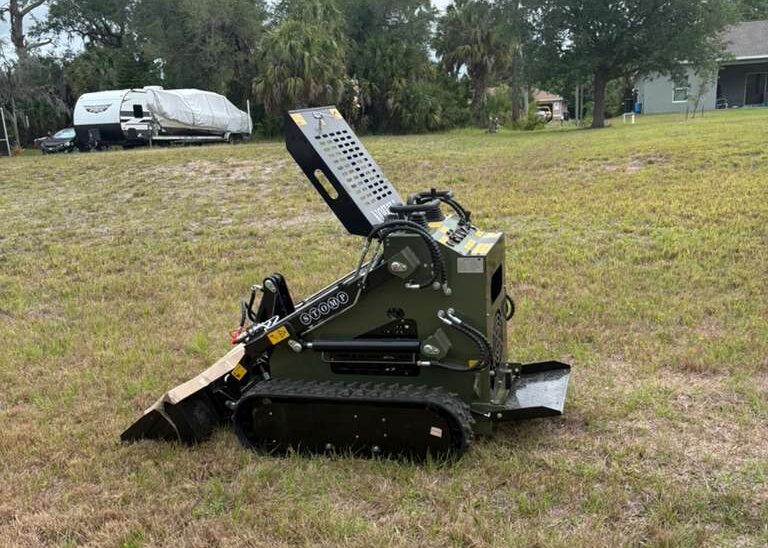
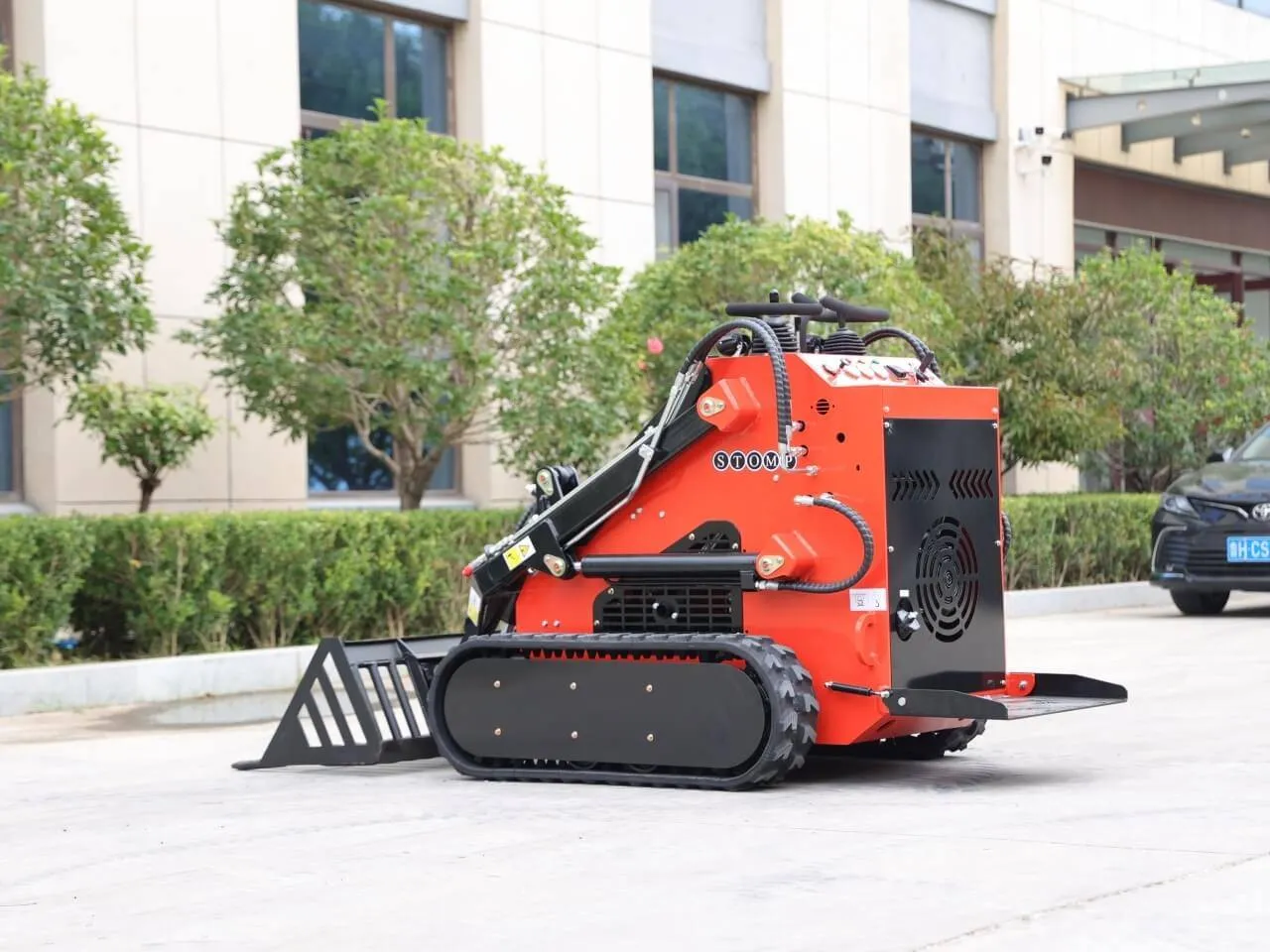
To do it correctly, you need a standard tape measure and a grease gun. First, clean the mud out of your undercarriage. Next, use your bucket to lift the front of the machine so both tracks are hovering off the ground. Place your tape measure at the center of the track and measure the sag from the bottom of the roller frame to the top of the track pad (usually 1.5 to 2 inches, but check your manual). Finally, use your grease fitting to add or release pressure until you hit the perfect specification.
Why Daily Inspections Are Essential
Some owners think a weekly or monthly inspection is enough. It isn’t. Track tension checks on your mini skid steer must be a daily habit. Why? Because environmental factors change constantly. Cold morning air contracts the rubber, while hot afternoon sun and heavy friction expand it. Mud packing tightly into the undercarriage creates a false sense of tightness.
Data from equipment dealers shows a massive difference in lifespan based on habits. Operators who perform daily track tension checks on your mini skid steer routinely get 2,000 hours out of a set of tracks. Those who skip the check are forced to replace them around 800 to 1,200 hours. That massive difference in longevity equals over $1,000 saved per set.
Warning Signs You Cannot Ignore
Your machine will actively warn you before it fails. If you hear excessive squeaking or grinding, your tracks are likely too tight and rubbing against the frame. If your machine shakes violently or loses power while turning, your tracks are slipping off the rollers due to excessive slack.
Conducting daily track tension checks on your mini skid steer allows you to spot uneven wear patterns and torn lugs before the track snaps completely. Speaking of getting the most out of your machine, maximizing your undercarriage isn’t the only way to boost efficiency. Check out these 10 uses for mini skid steer pallet forks to expand your job site capabilities.
The $1,000 Disaster You Can Avoid
Let’s look at a real-world disaster. An operator skips his track tension checks on your mini skid steer for a week. His left track becomes extremely loose without him realizing it. As he works on rocky terrain, stones get trapped inside the sprocket, grinding the metal teeth down to nothing.
To compensate for the loss of traction, he pushes the machine harder. The loose rubber stretches, the track snaps off the wheel motor, and the machine is dead in the dirt. The repair shop charges $900 for a new track, $400 for a new sprocket, and $300 for labor. Add in the $1,500 he lost because he couldn’t finish the job, and his total loss exceeds $3,000. All of this could have been prevented with a two-minute measurement.
Extending the Lifespan of Your Tracks
Maintaining perfect tension ensures even weight distribution across the ground. The machine rolls smoothly, generating less heat and reducing friction. Not only does the rubber last longer, but your fuel efficiency actually improves because the engine isn’t fighting against binding components.
📉 The Environmental Toll of Bad Tension
Loose tracks don’t just cost you money; they tear up your client’s property. A slipping track will dig deep ruts, destroy pristine turf, and cause heavy erosion, leading to angry customers and damaged reputations.
Common Operator Mistakes to Avoid
Even when operators try to do the right thing, they often make mistakes. Never check your tension while the machine is resting on the ground; the weight of the loader gives a completely false reading. Furthermore, be incredibly careful with your grease gun. Pumping too much grease stretches the rubber dangerously tight.
✅ Build the Daily Habit Today
Make track tension checks on your mini skid steer the very first thing you do every morning.
- Lift the machine using the front bucket.
- Clean out all mud and rocks.
- Measure the sag with a proper tape measure.
- Adjust with a grease gun to hit factory specs.
This simple routine guarantees peak performance and protects your wallet from devastating repair bills.